
The board of Evoke Plc has confirmed that it has begun a review of strategic options for the LSE gambling group, including a potential sale.
Evoke confirmed the development following media speculation around potential divestments of assets in the aftermath of the UK’s HM Treasury announcing significant tax hikes last month.
In the Autumn Statement in late November, Chancellor of the Exchequer, Rachel Reeves, confirmed that Remote Gaming Duty will increase to 40% GGR in 2026 and General Betting Duty (GBD) will increase to 25% GGR from 2027 onwards.
In common with all the major players in the UK market, Evoke expects this to have a huge impact on its business. The statement follows Evoke’s announcement that it would enter a new phase of cost controls and examine all business assets from 26 November.
Evoke – between a rock and hard place
Evoke was hit harder than most in the aftermath of Reeves’ tax announcements, falling over 6% on the day and unlike Entain and Flutter Entertainment did not see a rebound soon after.
The fall followed a period of rapid decline that has seen the share price lose more than 90% of its value over the past four years. Evoke’s market cap was below £100m at the time of writing.
Morgan Stanley and Co International and Rothschild and Co have been appointed as the joint financial advisors to guide Evoke through its strategic review and the options available to it.
In the aftermath of the Autumn Statement’s tax judgement, Evoke has been closely followed with analysts speculating on the future of its William Hill subsidiary and its European iGaming portfolio.
The company is highly exposed in the UK, which has always been the primary market for William Hill’s retail and online operations. This is now the case more than ever after a plethora of market withdrawals last month, mainly in Africa.
As well as William Hill, the 888 group of brands – 888Sport, 888poker and 888casino – are also active in the UK and will be hit by the tax rises, though the brands do have more international presence than William Hill.
A sale of William Hill in the UK could be a potential avenue, though the firm would likely make a big loss on its £2bn purchase of the company in 2022. Some investors may see value in William Hill’s retail assets as the GBD increase excludes in-person betting, but shop closures can still be expected.
Further afield, Evoke’s operations in Africa face an uncertain future after it shuttered William Hill operations in nine countries, leaving its joint venture 888Africa to target the markets under the 888 and BetLion brands.
Aside from the UK and Africa, there is one other market that has stood out as particularly lucrative for Evoke and as a shining light for the company prior to the confirmation of a new UK tax burden.
Evoke’s Italian job
In the aftermath of the Autumn Statement’s tax judgement, Evoke has come under close scrutiny, with analysts openly speculating about the future of its William Hill subsidiary and its wider portfolio of European iGaming brands.
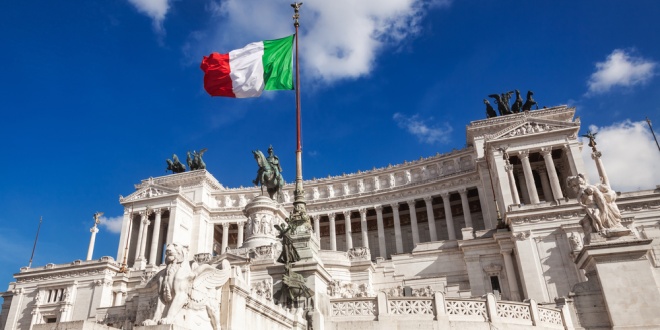
Market observers have suggested that leadership could consider pricing a sale of its Italian business, led by the 888 brand, as a means of unlocking immediate capital. 888 Italia has been an active operator in the market since its regulated launch in 2011.
However, Evoke maintains that it remains committed to its Italian operations, having recently paid €7m to secure a new Italian ADM licence. CEO Per Widerström has repeatedly identified Italy as a market where Evoke aims to expand its share and strengthen long-term growth.
For FY2024, international operations (including 888 Italia) continued to outperform expectations, with revenue rising 7.3% to £555m and Adjusted EBITDA increasing 30% to £130m.
As of 30 June 2025, Evoke reported £121m in cash (excluding customer balances), with total liquidity reaching approximately £250m when including its £129m undrawn revolving-credit facility.
Applying new cost controls, analysts predict that Evoke will prioritise strengthening its cash position and balance sheet, with further measures likely required to raise capital and offset the UK tax headwinds impacting its bottom line.
Evoke maintains that any strategic changes will be undertaken with the objective of “maximising shareholder value”. The group’s next actions will be scrutinised closely, as Evoke is widely viewed as the most precarious of UK gambling PLCs.
In the immediate aftermath of the announcement, Evoke’s share price has been steadily climbing. At the time of writing, it has increased by two percentage points, though it is still far below what it was on 25 November before the UK budget announcement.