With change afoot in Finland one would think that Paf, the exclusive operator of the autonomous Aland region, would be focused inward, but one can guess again.
The company delivered record operating results earlier this year, declaring over €200m in revenue in 2025 before embarking on a nautical acquisition in June this year.
Central to Paf’s success has been its international activity, as company Director, Jesper Eliasson, explains in an exclusive interview ahead of his appearance at the SBC Summit in Lisbon in September.
However, he also takes note of one of the biggest challenges facing the company, and the iGaming sector at large, in 2026.
People mainly tend to think about Paf as the Aland operator, but they may be more unfamiliar with your international presence. Can you walk us through the other markets you’re active in?
Paf is founded and based on the Åland Islands which is a self-governed part of Finland and was actually pioneering iGaming back in 1998. Hence, Finland became our first online market before entering other European markets in the 2000s, pre-regulation. Today we run some 10 own brands and have licenses in Spain, Sweden, Estonia and Latvia.
Paf was one of the first movers in Switzerland back in 2019. What were your initial impressions of the market, and how has your business there evolved since launch?
We started discussions around Switzerland as early as 2016 when preparations for the new regulated online market were underway. The Swiss model was designed differently from most European markets. Its primary objective was to protect and strengthen the country’s 21 land-based casinos by giving them exclusive access to online licences.
We entered into a strategic partnership with Grand Casino Luzern, providing our proprietary platform and operational expertise. Together, we launched mycasino.ch in August 2019 as one of the very first licensed online casinos in Switzerland.
Seven years later, mycasino.ch has developed into a business generating more than EUR 100 million in annual revenue and has established itself as the clear market leader with a market share exceeding 30%. It demonstrates the strength of combining local market expertise with a strong technology platform and continuous innovation.
Has the continued growth of the Swiss market, with new licence holders coming in, been a challenge for the Swiss Business? How do you remain resilient against competition?
Mycasino.ch benefited from a strong first-mover advantage, but maintaining market leadership for seven years requires much more than simply being first. The key has been a strong product offering, continuous innovation and a relentless focus on customer experience.
That said, the most significant competitive challenge today does not come from other licensed operators. It comes from the growing presence of illegal operators targeting Swiss consumers. Licensed operators do have advantages, such as access to the local banking and payment infrastructure, but the black market continues to represent a major challenge for the entire regulated sector.
Paf was able to declare over €200m in revenue recently. Which markets and products have contributed most significantly to your growth?
Yes, all markets showed growth and Spain had the strongest growth. Paf delivered a strong result in 2025, with revenue in the Paf Group increasing from €191.7m to €214.5m, a 12% increase. The main factor behind the improvement is the growing customer base from 685.406 to 765.887. The Group’s profit also improved, from €54.3m to €57.2m. And at the same time – as the only company in the world – reducing the yearly loss limits to 16.000 euro for adults above 24 years.
Illegal gambling activity has become a huge talking point in gambling, particularly when it comes to conversations about regulation and taxation – or over-regulation and over-taxation in the views of many across the international betting industry.
According to YieldSec, illegal gambling operations account for over 71% of European Union online gambling, amounting to some €80.6bn. Other estimates, like a recently shared one from CGI, put the global black market at over $5.9trn.
Back in Paf’s Aland, an autonomous region of Finland, radical nationwide change is underway. The Finnish government is pressing ahead with an overhaul of the monopoly held by Vveikkaus, the state-owned operator, driven by the fact that channelisation to the legal market has fallen way below the target of 90%.
As Eliasson tells us, for Paf, the firm has dealt with black market activity both in its home market of Aland and internationally, thanks to its operations in countries like the abovementioned Switzerland.
Eliasson elaborates further on the company’s experience of fighting illegal activity…

We talk a lot about black market activity in this industry. As the an European operator and highly active in the Swiss market, how serious a challenge has the growth in black market activity been for Paf on your home turf?
It’s very serious since we play on totally different competitive plane fields.
In Europe we have young legal markets with a few years on its neck, all jurisdictions with their own take and none of them have been able to shape a regulation that out competes the illegal/black markets wild wild west methods.
The legal markets are quite defenceless, which can be dramatically changed if the licensed operators and the authorities start to collaborate and share more data and market intelligence..
Are you hopeful that the opening up of the Finnish market next year will counteract black market activity? How can the industry and regulator make sure this happens?
It all depends on the regulator. If they have learned from the Dutch failure, allowing affiliates and bonus offerings within the regulatory framework and stopping neighbouring Estonia to become a new European Curacao.
More broadly, what’s your experience of the black market been in your other markets? Are there any where the situation has been particularly challenging?
All markets that we are in are under severe attack from illegal operators/black market. Simply remotely suited crypto operators and others that have not obtained a licence in the specific country.
They are not paying local taxes and are completely circumventing laws that regulate products, payments, marketing, bonusing, AML and responsible gaming. It goes without saying that we completely lack a level playing field in this industry.
The black market seems to be something of a hydra, constantly evolving and coming back online after blocks and bans. How can the licensed industry properly respond to this?
Since the illegal/black market hides out in various tax havens they do not need to comply with rules and regulations that have been set up by a European country. Blocked customers due to i.e. high spending without being able to prove affordability are perfectly welcomed to the black market. Hence, regulators also need to figure out when a blocked customer can return to the legal market.
How significant a threat to the licensed industry’s sustainability is the growth of the black market?
When having markets with 50/50% channelisation, on a scale from 4-10 it is definitely a 10.
If things are not dealt with, legal markets will implode. Which will lead to zero taxes and no player protection or transparency.
The countries will lose important revenues and more people will get harmed. What can be done to make life harder for illegal/black market operators?
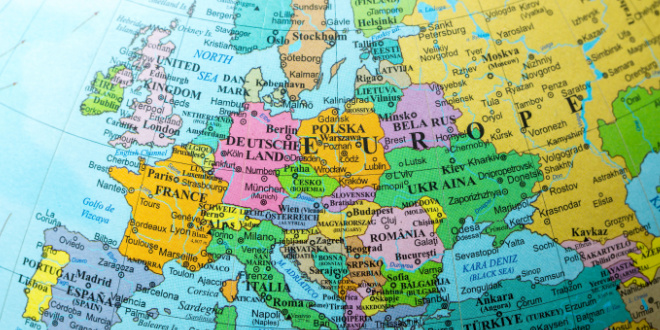
Paf is not alone in expressing concern about the prevalence of illegal gambling. Other major voices in the discussion include Entain in the UK, which has been campaigning heavily on the matter, and the European Gaming and Betting Association (EGBA) across the EU.
Nonetheless, it is not the only thing the regulated industry is dealing with. Stricter regulations and tax regimes are coming into effect across Europe, with some EU politicians now calling for a single, unified gaming tax across all 27 nations of the political bloc.
Interestingly, while Paf’s Eliasson shares EGBA’s concern about black market activity and its desire for more harmonised approaches to gambling regulation in the EU, he isn’t entirely opposed to the tax prospect…
What’s your opinion on the recent discussions around a possible pan-EU gambling tax. Is this going to cause more problems for the industry and its fight against illegal gambling?
I think that a pan-EU gambling tax could be a good thing, but at the same time we need to harmonise all the other terms in such legislation – with the big picture in front of us – that makes it attractive to come and pay taxes and be transparent with your business transactions.
Are we actually hoping for too much to happen here? When looking at the regulative trends with higher taxes and more scrutinization we see a more realistic picture in front of us.
What are the ideal regulatory and market conditions for the licensed industry to reassert control of European gambling markets?
The base line is that we accept that gambling is gambling and has been around and will be around forever. If politicians and regulators do not accept that fully we will continue to adopt laws that suit the next election and fuels the illegal/black markets. Gambling is not officially wanted but it is a huge entertainment product that if neglected will continue off shore.
We need laws and regulations that enables the licensed operators to offer its customers games that are what they are. No slowing down spin rates or risk classification of various products. Otherwise the European residents with its freedom to use the internet will continue to go off shore to the black market. In the EU we also sell 43% vodka, it’s not down regulated to 21%.
Furthermore, regulators could already today already be much more aggressive against digital marketing platforms securing that only licenced operators are allowed to target residents in a specific country.
You’’ll be discussing these topics and more at the SBC Summit Lisbon in September. What do you think the main talking points around the black market will be at the event?
There are clearly two sides of the coin.
On one side we have a decision from politicians that the market should be regulated, drive in taxes, limit potential and real damage on players and create transparency that hinders AML.
On the other hand why not live in a free world and do what we want claiming that the black market is a fantastic soil for development and innovation?
__________________________________
Held in Lisbon from 29 September to 1 October 2026, SBC Summit is one of the world’s largest gatherings of betting and gaming professionals.
The event will bring together 40,000 attendees from across the industry for three days of learning, networking, and discussion, alongside a major exhibition featuring leading brands from around the globe. For more information and tickets,
visit sbcevents.com/sbc-summit.