
The UK has a new Prime Minister, Andy Burnham, who took over from Keir Starmer in the country’s top political job on the afternoon of Monday, 20 July, 2026.
As is the fashion with a new PM, the Labour MP for Makerfield and former Greater Manchester Mayor was quick to get about appointing senior roles in the UK cabinet.
And while gambling will likely not be a top priority for Burnham nor his Cabinet, at least not yet with far bigger fish to fry, the industry and those associated with it should familiarise themselves with some key figures in the UK’s latest administration.
Lisa Nandy, DCMS
Lisa Nandy, MP for Wigan and a former Labour party leadership contender, has been kept on as the Secretary in charge of the Department of Culture, Media and Sport (DCMS). It was previously anticipated that she would move onto another role.
As DCMS Secretary, Nandy is easily the most important politician for the gambling space – perhaps only matched in importance in 2026 by the Chancellor of the Exchequer given the significance of last year’s budget to the gambling space.
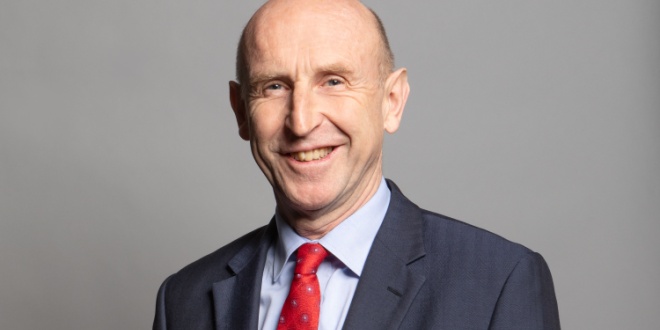
The role of Chancellor has switched from Rachel Reeves, whose November 2025 budget increased Remote Gaming Duty (RGD) on online gaming from 21% to 40%, to John Healey MP, the former Defence Secretary under ex-PM Keir Starmer.
“I would like to congratulate Lisa Nandy MP on her reappointment as Secretary of State for Culture, Media and Sport, and John Healey MP on his appointment as Chancellor of the Exchequer,” said Grainne Hurst, Chief Executive of the Betting and Gaming Council (BGC), the trade body for UK gambling.
Nandy’s year-long tenure as DCMS Secretary has seen her oversee the continued rollout of Gambling Act review recommendations. This process has not gone on without controversy, with particular industry pushback over affordability.
However, DCMS has also begun to take illegal gambling much more seriously under the Labour government, something warmly welcomed by the licensed industry.
The establishment of the Illegal Gambling Taskforce, which is actively consulting on a ban on unlicensed gambling sponsorships, has been particularly welcome.
Nandy also stuck to her guns against calls from Liberal Democrat MPs for the Football Governance Bill to require sports clubs to sever ties with the betting industry.
She remained adamant that the bill’s purpose was to set up the Independent Football Regulator (IFR), which it did upon approval in the Commons, and that gambling should remain primarily governed by the Gambling Act 2005.
“Lisa Nandy’s reappointment provides an opportunity to build on the positive relationship we have developed since she first took office,’ the BGC’s Hurst continued.
“She has consistently recognised the important contribution our regulated betting, casino and online sector makes to Britain’s economy, supporting 109,000 jobs, contributing £6.8bn in gross value added, generating £4bn in tax each year and investing millions more in sport, including racing.”
John Healey, HM Treasury
The UK’s new Chancellor inherits an unenviable situation. Inflation currently sits at 2.6% – albeit having slowed from 2.8% in May in a positive start for Burnham’s new government – while the Bank of England base rate sits at 3.75%, above the bank’s ideal 2% target.
Healey’s record on gambling is generally in favour of regulation, having voted in favour of the first, second and third readings of the Gambling Act 2005 – the piece of legislation which governs the British gambling industry, and was subject to a review from 2020-2023.
His voting record almost unanimously aligns with the stance taken by the New Labour government of Tony Blair (PM) and Gordon Brown (Chancellor), the aesthetics of the Gambling Act and the modern British gambling framework – though Brown has been critical of the industry in the years since, notably calling for the most extensive tax increases.
The BGC, as seen above, has praised Healey’s appointment as Chancellor. The trade body has taken particular note of his support of the Grand National charity initiative, which raised £20,000 from wager on UK horse racing’s biggest event.
“We were also pleased to see John Healey support this year’s Grand National charity bet initiative, which has helped raise significant sums for charities while celebrating one of Britain’s great sporting occasions,” said Hurst.
“There is important work ahead. We want to work with the Secretary of State to address our serious concerns about Financial Risk Assessments. The Gambling Commission has yet to demonstrate that the underlying data is sufficiently accurate and reliable.
“Pressing ahead before those concerns have been resolved risks driving customers away from the regulated sector and towards the growing illegal gambling market, where there are no safer gambling protections, no age verification and no contribution to British sport or the wider economy.”
There is one thing the industry may be hoping for from Healey – tax relief.
As mentioned above, the RGD rate went up to 40% from 1 April 2026, while General Betting Duty (GBD) will rise from 15% to 25% from April next year, with the exception of racing and retail betting.
While Healey has voted in favour of the industry’s modern incarnation in the past, it is unlikely to get his wish for tax relief from him. Burnham, now PM, has been more critical of the industry in the past, and his new government will likely stick to its predecessor’s tax rates on gambling.
Nonetheless, Hurst remarked that the BGC is looking forward to “working constructively with the Chancellor and his colleagues in the Treasury”.
“The new government inherits a sector that has been significantly weakened by recent tax increases, which have cost jobs, undermined investment and competitiveness while strengthening the illegal gambling market.
“We hope to work together to restore a stable, internationally competitive tax and regulatory environment that supports jobs, protects consumers and delivers sustainable revenues for the Treasury.”
Jonathan Reynolds, DBIST
Creation of new departments and mergers between existing ones are nothing new in UK politics.
The Department of Science, Industry and Technology (DSIT) was created by Conservative PM Rishi Sunak two years ago, and has now been scrapped by Labour’s Burnham.
The Department will merge with the Department for Business and Trade (DBT) to create a new combined department of Business, Innovation, Science and Trade (DBIST). This department will be headed by Jonathan Reynolds, MP for Stalybridge and Hyde.

Reynolds’ voting record, like other cabinet members, is broadly in favour of gambling regulation. He voted in favour of a clause in the Localism Bill of 2013 regarding permission for betting shops and in favour of a clause in the Gambling (Licensing and Advertising) Bill 2014 relating to self-exclusion.
Neither was adopted, however, having been voted against by most Conservative MPs, who at the time held the majority in parliament.
While it does not have the same significance to gambling as DCMS, the new DBIST will still have some relevance to the industry as a department tasked with attracting business investment, setting business-related policies, and perhaps most significantly technology related ones.
The department will include the UK’s first Minister of AI, Kanishka Narayan, MP for the Vale of Glamorgan. This may prove important for betting and gaming as more and more companies look to leverage AI technology for tasks like product development, marketing, customer service and responsible gaming.
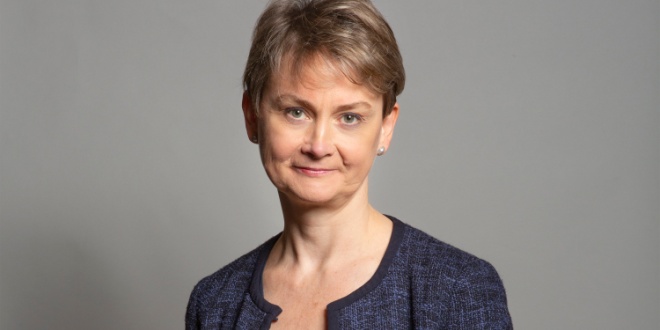
Yvette Cooper, DHSC
Yvette Cooper, MP for Pontefract, Castleford and Knottingley and the new Secretary for Health and Social Care, voted in favour of the Gambling Act in its second reading back in 2004, but was absent for its final reading in 2005.
As head of the Department of Health and Social Care (DHSC), however, she could be a very influential voice when it comes to gambling policy. This is particularly as voices within the DHSC become more vocal in their support for gambling to be treated as a public health issue rather than a business one.
The National Health Service (NHS) is also taking on greater significance in treating gambling harms. The service has taken on the remit of the statutory levy on gambling harms, collecting annual mandatory payments from licensed operators and choosing which treatment projects should receive the funding.
Gordon Moody, one of the UK’s largest operators of gambling treatment centres, recently received a grant form the NHS for example. Jon Murray, the charity’s Chief Executive Officer, remarked that the funding will help it “expand access to support and build new pathways into treatment and recovery”.
Change is on the horizon for the NHS, however. In one of his last acts as Health Secretary before stepping down, Wes Streeting proposed a bill which will scrap the Conservative-created administrative body NHS England, an objective Labour set out upon returning to government last year.
Cooper will hold the key political administrative role overseeing the NHS as it continues to expand its remit in gambling, and all the while health professionals across the country call for a more public health-based approach to regulating gambling.