Card counting tracks whether the remaining cards favor the player or the dealer. In many places it is not against the law, but casinos can refuse play, it takes practice and it does not guarantee a profit. It does not work in games that reshuffle every hand, which includes many random-number-generator blackjack games.
Card counting is often shown in films as a superpower. In reality it is a bookkeeping method with a small, uncertain advantage that is hard to use and easy for a casino to end. This guide explains what it is, why casinos react to it and why it is not a plan for making money.
What card counting is
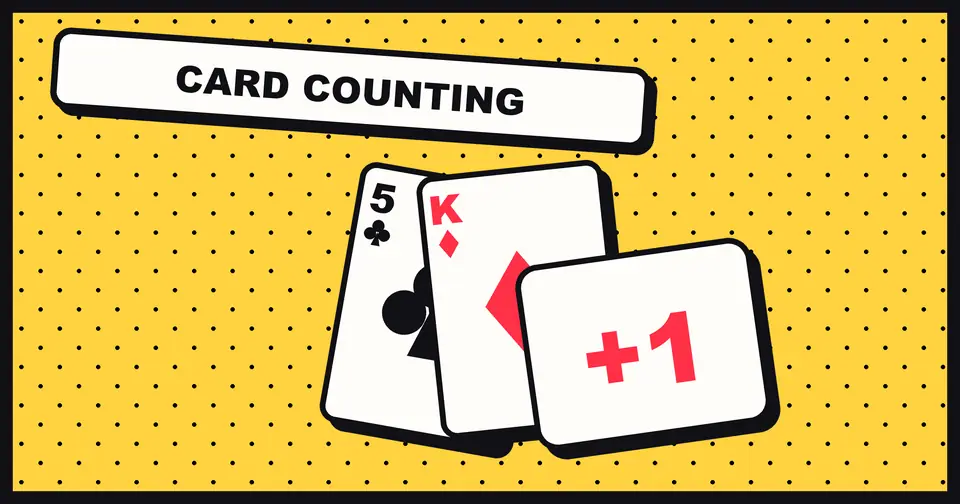
In blackjack, a deck rich in tens and aces favors the player and a deck rich in small cards favors the dealer. A counter assigns a simple value to each card seen and keeps a running total. In the common Hi-Lo system, cards 2 to 6 count +1, cards 7 to 9 count 0, and tens and aces count −1.
A positive running count means more high cards remain. Counters then convert it to a true count by dividing by the decks left in the shoe. In a hypothetical example, a running count of +6 with three decks left gives a true count of +2.
Is it legal?
Card counting uses only what a player can see and remember, and in many places it is not against the law. Rules differ by country, so this is not legal advice. A casino is a private business, however, and may ask a player to stop playing blackjack or to leave. Devices that help count cards are treated differently and are restricted in many places.
Why it is not a plan for profit
- Small edge, large swings. Even with a correct count, results in a session vary far more than the edge. A long run of losses is normal.
- Accuracy and speed. Errors cost the small advantage, and the count must be kept while following the game, not just the cards.
- Countermeasures. Casinos can reshuffle early, limit bets, watch bet changes or ask a player to leave.
- Game conditions. The advantage depends on the rules and on how many cards are dealt before a shuffle.
- Online games. Many games driven by a random number generator reshuffle every hand, so a count carries no information there. Live-dealer games use physical shoes.
Practical points for beginners
Counting is a mental exercise that takes long practice and still gives no certainty. It is better understood as a way of seeing how the game works than as a source of income. Errors multiply when attention drops, and a large change in bet size is easy for a casino to notice, so counters are often noticed. Any play should stay within a budget the person can afford to lose. For a plain overview of budgets, see bankroll and bet sizing in blackjack.
Where counting sits in the bigger picture
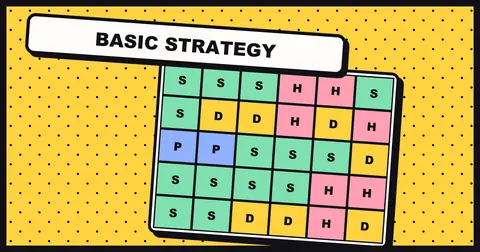
Basic strategy gives the best play for each hand without tracking cards, and it is the foundation counting builds on; see basic strategy, explained. Counting adds bet and play adjustments on top, which is where the difficulty and the risk come from.
See also: Hi-Lo counting trainer; The gambler's fallacy, explained.
Frequently asked questions
Is card counting cheating?
No. It relies only on observation and memory. Casinos can still decide not to let a counter keep playing.
Can I count cards in online blackjack?
Not in games that shuffle every hand, as many random-number-generator games do, so the count has no use there.