
Greg Knight, owner and Chief Executive Officer of Jennings Bet, believes the UK retail betting sector remains strong despite widespread shop closures across the industry.
Speaking after Jennings Bet surpassed 200 betting shops, Knight revealed the milestone was reached following the acquisition of 15 shops from Star Sports in May. The operator has since expanded further, opening another eight locations to take its estate to 212 shops.
This bucks a trend which has seen UK retail betting gradually diminish in recent years, with Gambling Commission stats showing a gradual drop in customer participation while the likes of Entain and evoke-owned William Hill close venues.
Knight argued that the decline in betting shop numbers reflects a process of “right-sizing” rather than the death of retail betting.
He suggested larger operators had carried too many underperforming legacy locations, while successful retailers continue to invest heavily in their estates.
“People don’t want to walk into a dump and sit there all day,” Knight said.
“We invest in modern shops, bright environments, HD screens and the latest technology. You want customers to feel like they’re in an exciting sports venue.”
“You can go into a town centre and see a brand spanking new Paddy Power or a Ladbrokes – they’ve invested a lot of money. It looks fantastic inside, but then you can go two miles away to a little side street and there might be a legacy betting shop that hasn’t seen a lick of paint for 20 years, and it looks dowdy and unloved.
“The key to it for me, which we’ve always done, is invest. Some of the competition is really struggling at the moment, but that’s where we differ because we’re opening new shops in the right location.
“We haven’t got many legacy shops that have fallen by the wayside, we do shut shops occasionally, but investing is where we’re different.”
Jennings Bet doubles size post-pandemic
Jennings Bet has doubled its retail empire since 2021, largely through acquisitions. Knight explained that the company acquired two established UK chains – Mark Jarvis bookmakers and Megabet (formerly Stan James) – adding close to 100 shops to its portfolio.
Unlike many competitors, Jennings Bet exited online betting and now focuses exclusively on retail operations.
“We found online a struggle,” Knight said. “We decided to concentrate our investment on retail, even though that was the opposite direction to everyone else.”
Knight pointed to the continued strength of UK retail divisions at major listed businesses like Entain and Flutter Entertainment, arguing that betting shops still serve a loyal customer base that is unlikely to migrate online.
He explained: “If you’ve got a good unit, as we’ve found, there is still a very, very good business.
“When you get the big firms announcing their quarterly results, you consistently see that UK retail remains strong.”
Commission data has successively painted a grim picture for UK retail betting. Gross gaming yield (GGY) stats published in February showed an 18% year-over-year decline to £530m in the last quarter of 2025.
The Gambling Survey for Great Britain (GSGB) has also shown online gambling outpacing retail gaming in terms of consumer participation – 39% against 29%, with lottery tickets accounting for a significant chunk of the latter.
This has led to observations that retail betting is on its way out, particularly as younger demographics move more towards online consumption, but Knight doesn’t buy into this.
He dismissed concerns that the sector’s older demographic represents a long-term threat.
“Today’s 50-year-old is tomorrow’s 60-year-old,” he said.
“People have been saying for 30 years that our customers would disappear, but we’re still here.”
Knight highlighted self-service betting terminals as a key tool for attracting younger customers by offering an online-style betting experience within a retail environment.
Horse racing and retail betting
While horse racing remains a vital Jennings Bet product, Knight warned that rising media rights costs are making the sport increasingly difficult for bookmakers to support.
He described racing as moving towards becoming a “loss leader”, arguing that bookmakers are paying significantly more to deliver racing content while racing itself continues to push for greater financial contributions through the levy.
“If racing isn’t getting enough levy and bookmakers are saying they’re paying too much, somebody is getting it,” Knight said. “That’s the media rights companies.”
This comes amid widespread worry within the UK’s horse racing community, with changes needed to modernise the sport.
While the sport may have escaped the tax raises of April 2026, announced in Rachel Reeves‘ November 2025 budget, it continues to face financial difficulties, and will feel the knock on effect as betting companies reduce marketing budgets as a result of the heavier tax burden.
Despite the horse racing levy expected to have an income of around £110m for this season, key figures have asked questions about the longevity of the sport.
On a more positive note, Knight asserted that football betting continues to grow rapidly, with betting patterns increasingly shifting away from horse racing.
He said: “There’s a huge uplift in football betting. We seem to have reached a pretty decent place with our markets, so there are pluses as well as minuses.
“I would say definitely the cost pressures are far greater than they were previously, but on the upside, there are growing markets. There is a definite shift from horse racing to football.”
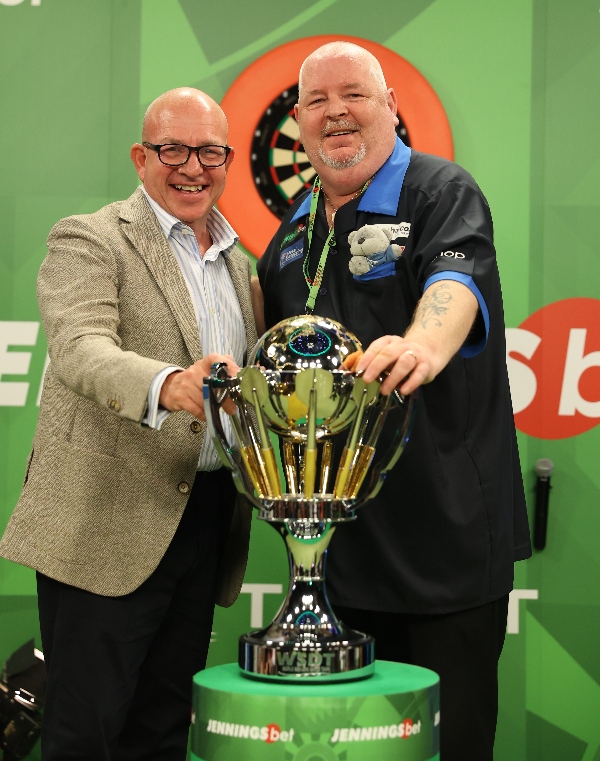
The business is also active in other mainstream UK sports, having notably tied down sponsorship deals with the Seniors Snooker World Championship and the World Seniors Darts Tour.
Jennings Bet’s and the community
Despite the challenges, Jennings Bet still also remains heavily involved in horse racing sponsorship.
Knight said the company’s investment goes beyond branding, with the operator regularly organising coach trips, racecourse entry and hospitality for customers.
At this month’s Northumberland Plate Festival, JenningsBet expects to take around 600 customers to the event.
“You’re not going to get that experience online,” he said.
“It’s like a club. It’s a good bonding exercise with your customers.
“They all have a good day out, and it’s that feeling of being part of a community.”
Knight said Jennings Bet’s strategy remains straightforward – invest in modern shops, maintain strong customer relationships and continue expanding where opportunities exist.
“We’ve got a good recipe,” he said. “Modern shops, investment, staff training and customer engagement. We’re just going to keep using it and see where it gets us.
“It works, so we’re just going to carry on using it and see where it gets.
“With over 200 shops, we’ve proven that we’re more than sustainable. I don’t think retail betting is a diminishing business and we’ve proven that for long enough.”
With Jennings Bet unaffected by the increase in taxes for online betting companies, the family-owned business will be continuing to look at capitalising on market share despite the almost doom and gloom outlook on retail betting in the UK.