What you are looking at
Each simulated session is a series of independent rounds. The page draws every round from the chosen model, adds up the result and repeats this for hundreds or thousands of sessions. The histogram counts how many sessions ended near each final result. The lines show the first 25 sessions round by round.
How to read the result
- Average session result: should land close to the theory line (stake × rounds × the average result per round).
- Typical swing: the standard deviation of the final results. It grows with the square root of the number of rounds, while the average cost grows in direct proportion, so in a short session luck outweighs the house edge.
- Share of sessions ending ahead: how many simulated sessions finished above zero. For low-volatility games this share eventually falls as sessions get longer. For high-volatility games it can rise at first and stay far from zero for a long time, while the average result stays negative. Ahead and behind need not add up to 100% because of break-even sessions. Model output, not the likelihood of any real result.
The models
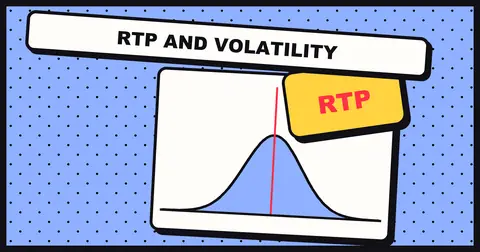
European and American roulette use their exact outcomes. Slot A and Slot B are the two invented games from the guide slot RTP and volatility, explained: same RTP of 96%, very different spread. The blackjack model is a simplified six-outcome approximation (win, loss, push, natural, and doubled win or loss) with an assumed average cost of 0.5% and an assumed spread of 1.15 stakes per hand, chosen for illustration; real values depend on the rules. It is not a full simulation of the game. The custom option draws each round from a normal distribution with your numbers, which is a rough approximation for skewed games.
Limits
These are mathematical models with no deposits, no bonuses and no player decisions or emotions. The page does not predict any real session and is not an invitation to gamble. For the same arithmetic as formulas, see the house edge cost calculator.
If gambling stops feeling under control, see signs it is time to stop gambling.
Frequently asked questions
Why do some simulated sessions end ahead if the game has a house edge?
A model can produce positive results in some sessions by chance. This does not change the average, which is negative, and it is not evidence that a real player could expect to finish ahead.
Is the simulation a forecast for real play?
No. It shows what a mathematical model does on average and how widely single sessions spread. Real games differ in rules and in how they are played.